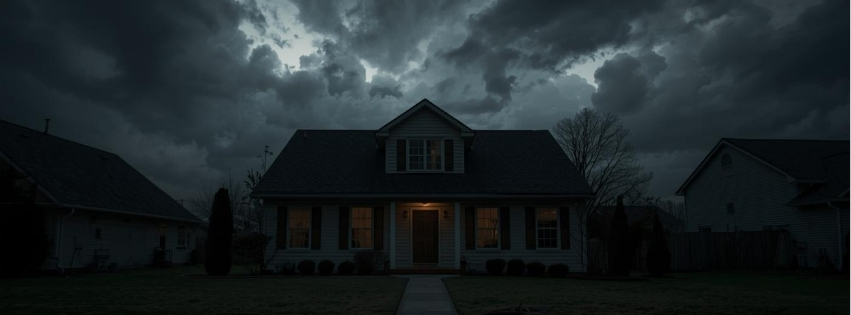
In Washington state, 1 in 3 pre-1950 homes we've analyzed triggers an elevated insurance difficulty rating. Higher premiums, fewer carriers willing to write the policy, and a real chance of getting declined at renewal.
Most homeowners find this out after closing. The carrier already knew.
What carriers actually look at
When you apply for homeowner's insurance, the carrier doesn't just check your claim history. They assess the property itself — construction era, roof condition, electrical system age, proximity to geological hazards, flood zone status, even nearby tree species.
Each factor adds to an internal risk profile. Enough factors stack up, and you move from "standard market" to "we need to talk." You're standing in the kitchen of your new home, opening an envelope that says your premium is 3x what you budgeted — and nobody warned you.
CaveatBuyer scores 16 of these risk factors across three categories: availability (can you get a policy at all), premium impact (how much more will you pay), and renewability (will the carrier keep you).
The four tiers
Standard — no significant risk factors. Competitive rates, your pick of carriers.
Elevated — factors pushing premiums 15-40% above area average. A knob-and-tube wiring inference, a roof over 20 years old, or steep slope proximity lands you here.
Challenging — multiple compounding factors. A pre-1940 home with no rewire permit, in a landslide-prone area, with wood shake roofing. Standard carriers decline. You're shopping surplus lines at 2-3x the area average.
Restricted — structural insurability barriers. FEMA flood zones require separate policies ($800-$3,000+ per year). Homes with active oil tanks or contamination face exclusions no premium can solve.
Some factors are fixable. Some aren't.
Fixable: Knob-and-tube wiring ($8,000-$15,000 to remediate), polybutylene plumbing ($8,000-$20,000 repipe), wood shake roof, FPE/Zinsco panels. Fix the factor, the risk drops.
Not fixable: Steep slope designation (15-40% surcharge, permanent), FEMA flood zone, liquefaction-prone soil, wildland-urban interface proximity. These are baked into the land. You can't renovate your way out of geology.
The compound effect catches people. A 1938 home in a steep slope zone with inferred knob-and-tube hits three factors at once. Any one is manageable. Together, they push you into restricted territory.
Why this matters before you close
If the property lands in "challenging" or "restricted," you're looking at $3,000-$6,000 per year in premiums. That's $250-$500 per month that doesn't show up on the listing page or your agent's mortgage estimate.
Your inspector doesn't check insurance risk factors. Your agent hasn't cross-referenced build year, permit history, and geological hazard maps. Nobody in the transaction is paid to connect those dots for you.
The data to predict this sits in public records. CaveatBuyer connects it before you buy. Check any address at caveatbuyer.com.
Read next: Should I buy a house with knob-and-tube wiring? — era, permits, carriers, and what to price into the offer.